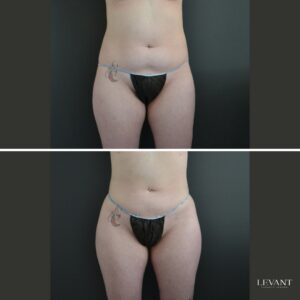
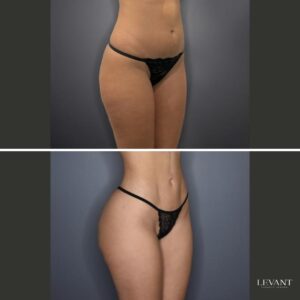
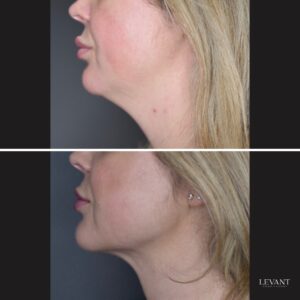
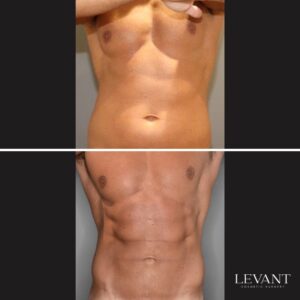
Vaser Liposuction
Aims to reduce excess fat that may be difficult to lose through diet and exercise alone. ⓘ


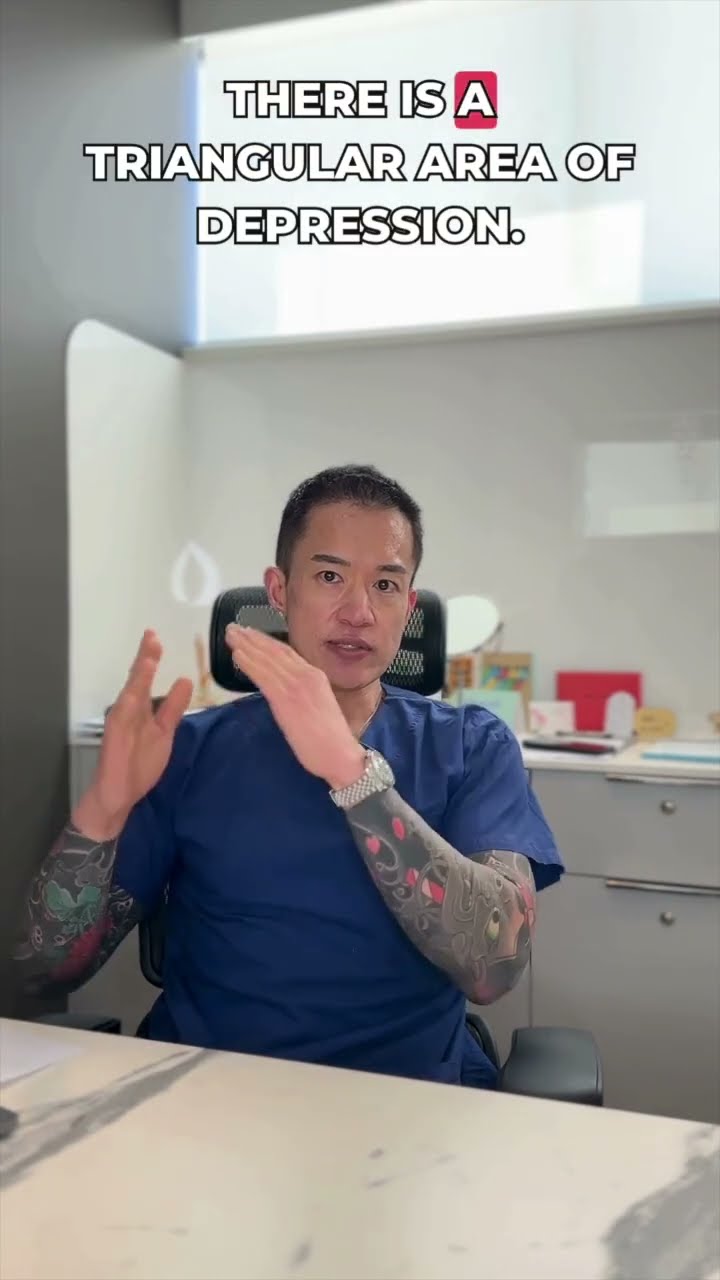
Dr Kim says the most common areas for his male patients are the upper and lower abdomen, love handles (flanks), the male chest where gynecomastia is present, and the upper and lower back. He explains that the back is approached differently in men and women: in men, the aim is generally to change the shape of the upper back rather than reduce its width. Suitability can only be assessed in a consultation.
So, what are the common areas that my male patients get with liposuction? So, the most common areas are upper lower abdomen and love handles, the male chest if they're suffering from gynecomastia, and also the upper and lower back. Now, the back regions on how we target it on a male patient is very different to a female patient.
So, on a female patient when you're doing the upper and lower back, you're trying to make the area as slim as possible to make their upper body torso upper torso frame as only as big as their musculoskeletal frame allows. Now, in a male patient, you want to accentuate the V-taper. So, you're not trying to reduce the actual width of the upper back, but the upper back actually is where the pectoralis and the latissimus dorsi muscle meet.
In between, if you get very lean, there is a triangular area of depression. Now, if you have a bit of excess body fat, that depression area, instead of being depressed, actually becomes quite full of fat and protrudes. So, by removing that fat there, you're able to separate between the pec major and the latissimus dorsi to make the muscles appear more separate and defined.
And the lower back continues that down into the waist, where even in a masculine frame, you're trying to accentuate a broad shoulder-to-waist ratio. So, getting rid of the lower back fat helps in that.
In this video, Dr Mitchell Kim (MED0001187435, Registered Medical Practitioner: General) explains the areas his male patients most commonly ask about, and how the approach differs from female patients. Below is some background to help you understand the topic before you speak with a practitioner.
Dr Kim says the most common areas for his male patients are the upper and lower abdomen, the love handles (flanks), the male chest where gynecomastia is present, and the upper and lower back.
In female patients, Dr Kim explains that the aim with the back is generally to slim the area as far as the musculoskeletal frame allows. In male patients, the aim is generally to change the shape of the upper back rather than reduce its width. The upper back is where the pectoralis and latissimus dorsi muscles meet, and fat can fill the depression between them. Removing fat there is intended to make the muscles appear more separate and defined.
The lower back continues this down into the waist. Dr Kim explains that the aim there is to reduce fat around the waist. How your body responds depends on your own anatomy, and your practitioner will discuss what may be realistic for you.
Vaser liposuction is not a treatment for obesity or a substitute for a healthy lifestyle. In general, practitioners may consider people who are in good general health and at a stable weight, who are looking to address specific areas of fat, and who have skin with sufficient elasticity. Suitability can only be determined in a consultation with a registered medical practitioner.
All surgery carries risk. Potential complications include infection, swelling, bruising, scarring, burns, changes in skin sensation, asymmetry or uneven results, fluid accumulation and, in rare cases, blood clots or reactions to anaesthesia. Some people may need further surgery. Recovery times and outcomes vary between individuals. Read more about risks and recovery.
Cosmetic surgery is a serious decision. If you’re considering Vaser liposuction, you will need a referral, preferably from your usual general practitioner, before your consultation. The consultation is the place to discuss your concerns, medical history, options (including not having surgery), risks and costs. Learn more about Vaser liposuction or request a consultation.
All surgery carries risk. Outcomes are individual and may vary. Speak with a registered medical practitioner about whether a procedure is suitable for you. View risks
Request a consultation with a registered medical practitioner to discuss your concerns, options, risks and recovery.