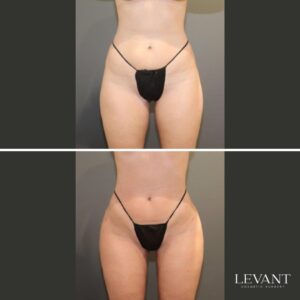
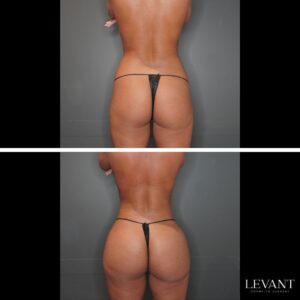
Vaser Liposuction
Aims to reduce excess fat that may be difficult to lose through diet and exercise alone. ⓘ


Dr Kim asks liposuction patients to stay in the city of their surgery for one week, so drains, stitches and healing can be checked. After fat transfer to the buttocks and hips, he asks for two weeks. International patients flying home at two weeks need to be able to lie flat on their stomach for most of the flight; otherwise he asks them to stay six weeks.
For all interstate and overseas patients, how long do you have to stay in the city that you have the surgery? So for liposuction patients, I ask to stay for one week. We need to see you at that one week mark because you might have some drains that need to be removed. You might have some stitches that need to come out and also we need to make sure you're healing well and then you can fly or drive back home.
Now for people who are getting fat transfer surgery especially fat transfer to the buttocks and hips I ask you to stay in the city of your surgery for two weeks before flying back home. Now the reason for that is because yes you can use the BBL pillow on the plane but right back home but it is really the first two weeks from your surgery that I feel is a critical time for the fat to get maximum retention into your body to get the new blood supply.
So even though most domestic flights in Australia aren't too long, I'd still rather delay that for the first two weeks. Now for international patients after fat transfer surgery, if you're going to fly back at 2 weeks, you have to be flying at least business so you can be lying flat on your tummy for majority of the flight.
If you're flying back economy, I'm afraid you have to stay here for six weeks.
In this video, Dr Mitchell Kim (MED0001187435, Registered Medical Practitioner: General) explains how long interstate and overseas patients are asked to stay after surgery. Below is some background to help you understand the topic before you speak with a practitioner.
For liposuction, Dr Kim asks patients to stay in the city of their surgery for one week. You need to be seen at the one-week mark, as you may have drains to remove or stitches to come out, and the team needs to check you are healing well. You can then fly or drive home.
For fat transfer, especially to the buttocks and hips, Dr Kim asks patients to stay for two weeks before flying home. He says the first two weeks are a critical time for the fat to establish a new blood supply. A BBL pillow can be used, but even on a short domestic flight he would prefer to delay travel for those two weeks.
For international patients after fat transfer surgery, Dr Kim says that flying home at two weeks means flying at least business class, so you can lie flat on your stomach for most of the flight. If you are flying economy, he asks you to stay for six weeks.
Vaser liposuction is not a treatment for obesity or a substitute for a healthy lifestyle. In general, practitioners may consider people who are in good general health and at a stable weight, who are looking to address specific areas of fat, and who have skin with sufficient elasticity. Suitability can only be determined in a consultation with a registered medical practitioner.
All surgery carries risk. Potential complications include infection, swelling, bruising, scarring, burns, changes in skin sensation, asymmetry or uneven results, fluid accumulation and, in rare cases, blood clots or reactions to anaesthesia. After fat transfer, risks also include fat necrosis (death of the transferred fat), oil cysts and, in rare cases, fat embolism (fat entering the bloodstream), which can be life-threatening. Some people may need further surgery. Recovery times and outcomes vary between individuals. Read more about risks and recovery.
Cosmetic surgery is a serious decision. If you’re considering Vaser liposuction, you will need a referral, preferably from your usual general practitioner, before your consultation. The consultation is the place to discuss your concerns, medical history, options (including not having surgery), risks and costs. Learn more about Vaser liposuction or request a consultation.
All surgery carries risk. Outcomes are individual and may vary. Speak with a registered medical practitioner about whether a procedure is suitable for you. View risks
Request a consultation with a registered medical practitioner to discuss your concerns, options, risks and recovery.