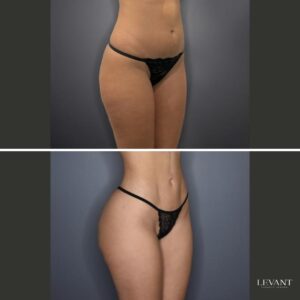
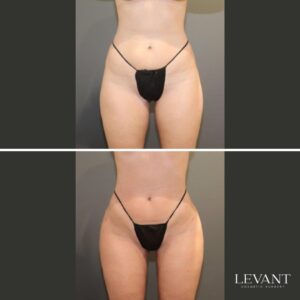
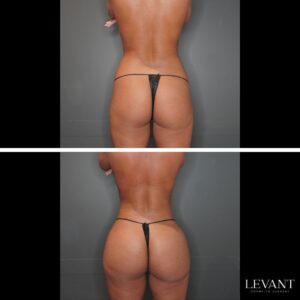
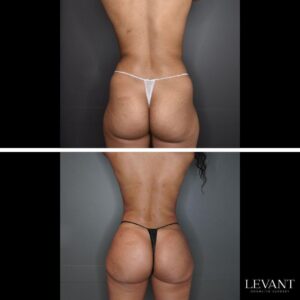
Vaser Liposuction
Aims to reduce excess fat that may be difficult to lose through diet and exercise alone. ⓘ


Dr Kim explains that when you gain weight, fat cells get bigger, so areas that received a fat transfer are usually the first to look larger, while liposuction areas, which have fewer fat cells, change less. If you lose weight, transferred areas are generally among the last to look smaller. Outcomes vary, and expectations should be discussed in a consultation.
Okay. So, what does weight fluctuations do to your body after liposuction or fat transfer surgery? So, when your weight's going up, essentially you're in the calorie surplus and all the fat cells in your body are slowly getting bigger one by one. So what that means is if you had an area of fat transfer where we took fat from other areas and put it into a specific area breast, hips, buttocks usually those areas now are area of high fat cell density.
So when you gain weight in that state those areas that's received the fat transfer will be the first areas that you visibly see getting bigger. So breast, hips and bum after weight gain. Now, what about the areas that you did liposuction? So, those areas where you took those fat excess fat cells from those areas, they do still have fat because you do need a little bit of fat under your skin.
You can't literally get 100% of fat out under the skin. Those areas with weight gain, yes, those fat cells will be getting bigger, too. But because there's so few of them, it's going to take a lot of weight gain for there to be a significant change in the actual visual appearance. Now, conversely, if you were to lose weight after liposuction and fat transfer surgeries, the areas that you did fat transfer, they will be the most resistant to change.
So after fat transfer the hips and bum if you were to lose weight yes they will go down as well but relative to other areas of your body that will be one of the last areas to visibly get smaller.
In this video, Dr Mitchell Kim (MED0001187435, Registered Medical Practitioner: General) explains how weight changes can affect the body after liposuction and fat transfer surgery. Below is some background to help you understand the topic before you speak with a practitioner.
Dr Kim explains that when you are in a calorie surplus, the fat cells in your body get bigger. After a fat transfer, the treated areas, usually the breast, hips or buttocks, have a high density of fat cells, so they are generally the first areas where you will see a visible change.
The areas where fat was removed still have some fat, because you need a little fat under the skin. Those cells can get bigger too, but Dr Kim says that because there are fewer of them, it generally takes more weight gain for a significant visual change.
If you lose weight after these surgeries, Dr Kim explains that the fat transfer areas tend to be the most resistant to change. They will reduce, but they are likely to be among the last areas to look smaller.
In general, practitioners may consider people who are in good general health and at a stable weight, do not smoke (or will stop before and after surgery as advised), and are not pregnant or breastfeeding. Suitability can only be determined in a consultation with a registered medical practitioner.
All surgery carries risk. Potential complications include infection, swelling, bruising, scarring, burns, changes in skin sensation, asymmetry or uneven results, fluid accumulation and, in rare cases, blood clots or reactions to anaesthesia. After fat transfer, risks also include fat necrosis (death of the transferred fat), oil cysts and, in rare cases, fat embolism (fat entering the bloodstream), which can be life-threatening. Some people may need further surgery. Recovery times and outcomes vary between individuals. Read more about risks and recovery.
Cosmetic surgery is a serious decision. If you’re considering gluteal fat transfer, you will need a referral, preferably from your usual general practitioner, before your consultation. The consultation is the place to discuss your concerns, medical history, options (including not having surgery), risks and costs. Learn more about gluteal fat transfer or request a consultation.
All surgery carries risk. Outcomes are individual and may vary. Speak with a registered medical practitioner about whether a procedure is suitable for you. View risks
Request a consultation with a registered medical practitioner to discuss your concerns, options, risks and recovery.