Vaser Liposuction
Aims to reduce excess fat that may be difficult to lose through diet and exercise alone. ⓘ


Lipo 360 is not an official medical term, and Dr Kim notes that different people classify it differently. He describes it as five areas around the torso: the upper abdomen, lower abdomen, lower back, love handles or flanks, and the sacral region. Each area has its own aim, and suitability can only be assessed in a consultation with a registered medical practitioner.
Okay, so you might have heard the term lipo 360 and wonder what does actually mean. Now, first of all, lipo 360 is not an official medical term and I have found that different people classify differently. Now, how I classify lipo 360 is four five areas. Your upper abdomen, your lower back, your love handles or the flanks, and the sacral region.
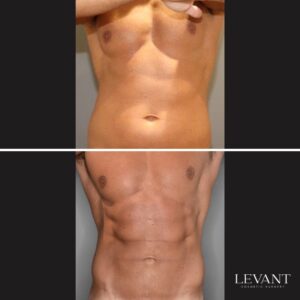
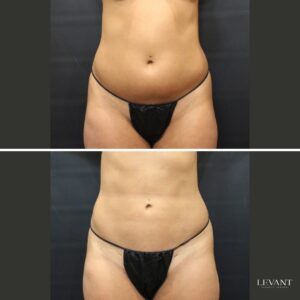
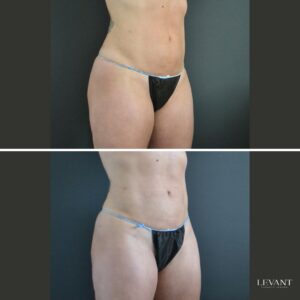
And the goal of lipo 360 is to try to make your abdomen as flat as possible and letting some of the abdominal contour show to make it look more athletic. The lower back region is to really make the waist as small as possible. With your love handles, instead of bulging outwards, you want to make it curve in and concave in to make a more harmonious transition down to the hips.
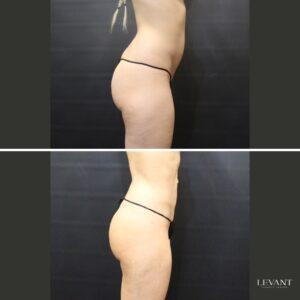
And the sacral fat pad is the part just above your bum in the middle. The idea with the sacral area is you want to get rid of the fat pad there to increase the curvature coming down onto your buttocks from your torso. So, that is what I consider as lipo 360 and consists of five areas.
In this video, Dr Mitchell Kim (MED0001187435, Registered Medical Practitioner: General) explains what the term lipo 360 means and the areas he includes. Below is some background to help you understand the topic before you speak with a practitioner.
You may have heard the term lipo 360. Dr Kim explains that it is not an official medical term, and that different people classify it differently. He describes it as five areas: the upper abdomen, lower abdomen, lower back, love handles or flanks, and the sacral region.
With the abdomen, Dr Kim says the aim is to make the area as flat as possible while letting some of the abdominal contour show. The lower back region aims to reduce the waist, and the love handles aim to curve in for a smoother transition down to the hips. The sacral fat pad is the part just above the buttocks in the middle, and the aim there is to increase the curvature from the torso down to the buttocks. These are aims rather than promised outcomes, your own anatomy affects what is possible, and treating more areas generally means a more involved recovery.
Abdominal liposuction uses Vaser technology to break down fat cells before they are removed via suction. It is performed as a day procedure, usually under local anaesthetic with sedation. The time needed depends on the number and size of the areas being treated.
Vaser liposuction is not a treatment for obesity or a substitute for a healthy lifestyle. In general, practitioners may consider people who are in good general health and at a stable weight, who are looking to address specific areas of fat, and who have skin with sufficient elasticity. Suitability can only be determined in a consultation with a registered medical practitioner.
All surgery carries risk. Potential complications include infection, swelling, bruising, scarring, burns, changes in skin sensation, asymmetry or uneven results, fluid accumulation and, in rare cases, blood clots or reactions to anaesthesia. Some people may need further surgery. Recovery times and outcomes vary between individuals. Read more about risks and recovery.
Cosmetic surgery is a serious decision. If you’re considering abdominal liposuction, you will need a referral, preferably from your usual general practitioner, before your consultation. The consultation is the place to discuss your concerns, medical history, options (including not having surgery), risks and costs. Learn more about abdominal liposuction or request a consultation.
All surgery carries risk. Outcomes are individual and may vary. Speak with a registered medical practitioner about whether a procedure is suitable for you. View risks
Request a consultation with a registered medical practitioner to discuss your concerns, options, risks and recovery.