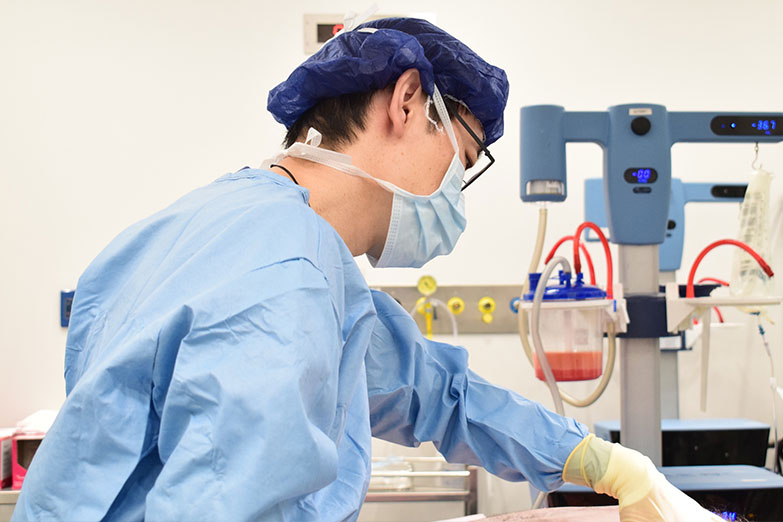
Vaser Liposuction
Aims to reduce excess fat that may be difficult to lose through diet and exercise alone. ⓘ


People researching liposuction in Sydney and across Australia often ask about the difference between VASER liposuction and traditional liposuction. While both are surgical procedures used to remove fat, they use different techniques and are suited to different situations.
This article is based on clinical information shared by Dr. Mitchell Kim, Registered Medical Practitioner (MED0001187435), practising at Levant Cosmetic Surgery.
VASER liposuction is a form of ultrasound-assisted liposuction. It uses ultrasound energy as part of the process to help separate fat cells before they are removed.
This approach may allow doctors to work in areas closer to the skin in some cases. The technique used depends on individual anatomy, the treatment area, and clinical assessment.
VASER liposuction is still a surgical procedure and involves anaesthesia, recovery time, and post-operative care.
Traditional liposuction removes fat using a cannula to suction fat cells directly from the body. It does not use ultrasound energy as part of the process.
This technique may be considered in areas where broader fat removal is planned. As with all liposuction procedures, technique selection depends on patient assessment and surgical planning.
VASER liposuction uses energy during fat removal, which may influence tissue response during healing. Skin changes after surgery vary between individuals and depend on factors such as:
Skin elasticity
Age
Volume of fat removed
Natural healing response
Neither VASER nor traditional liposuction removes excess skin. Liposuction is not a skin tightening procedure, and expectations around skin response are discussed during consultation.
Temporary effects such as swelling, bruising, and fluid accumulation are common during recovery for both techniques.
There is no single “better” liposuction method. The most appropriate approach depends on:
The areas of the body being assessed
Fat distribution and tissue quality
Overall health
Surgical goals discussed during consultation
Some areas may be more suitable for one technique than another. These decisions are made based on individual assessment, not on a one-size-fits-all approach.
Recovery timelines vary between patients and procedures. Regardless of technique, recovery commonly involves:
Wearing a compression garment for several weeks
Temporary swelling and bruising
Gradual changes as healing progresses
Follow-up appointments are an important part of post-operative care and allow your doctor to monitor healing and address concerns.
Liposuction is a regulated surgical procedure and must be performed in appropriate clinical settings. As with all surgery, risks may include:
Infection
Bleeding
Fluid collection (seroma)
Contour irregularities
Changes in sensation
These risks are discussed in detail during consultation.
VASER liposuction and traditional liposuction are both established surgical techniques. Understanding how they differ helps patients have informed discussions during consultation and set realistic expectations.
Liposuction is designed to remove fat, not cellulite. Cellulite relates to fibrous connective tissue beneath the skin. In some cases, removing fat may make cellulite more noticeable. Other treatments may be discussed depending on individual concerns.
Fat cells removed during liposuction do not return. However, remaining fat cells can change in size with weight fluctuations. Long-term changes vary between individuals.
Some people require only one procedure. Others may be advised to stage treatment depending on anatomy, safety considerations, and overall surgical planning.
In some cases, combining procedures may be discussed. This depends on health, anaesthesia considerations, and surgical complexity, and is assessed individually during consultation.
Disclaimer: This article is general information only and does not replace a medical consultation. Suitability for liposuction, potential risks, recovery period, and individual considerations are discussed in detail during consultation with a qualified medical practitioner.