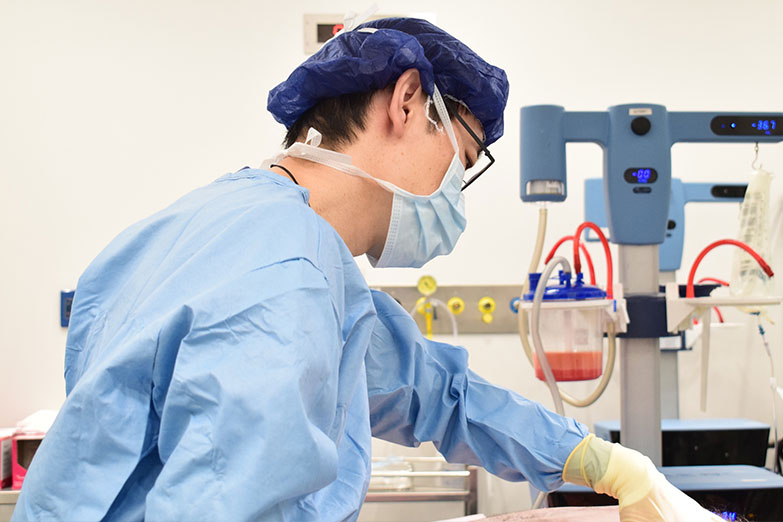
Vaser Liposuction
Aims to reduce excess fat that may be difficult to lose through diet and exercise alone. ⓘ


People exploring breast surgery options often ask about the difference between breast fat transfer and breast implants. While both procedures aim to increase breast volume, they work in very different ways and suit different situations.
This article is based on clinical information shared by Dr. Mitchell Kim, Registered Medical Practitioner (MED0001187435), practising at Levant Cosmetic Surgery.
This article is based on clinical information shared by Dr. Mitchell Kim, Registered Medical Practitioner (MED0001187435), practising at Levant Cosmetic Surgery
Fat transfer uses a person’s own body fat to add volume to the breasts. The procedure involves:
Not all transferred fat survives the process. In the weeks following surgery, some fat is naturally absorbed by the body. Fat cells that establish a blood supply may remain long term, but the amount retained varies between individuals. Because fat transfer relies on donor fat from the patient’s own body, it is not suitable for everyone.
Breast implants use silicone or saline prostheses to increase breast volume. During surgery, an implant is placed into a pocket created within the breast or chest area.
Implants allow for more controlled volume selection, but they involve placing a medical device into the body. Like all surgical procedures, implant surgery carries risks and requires ongoing monitoring.
The main differences relate to how volume is added and how predictable the change may be.
Fat transfer:
Breast implants:
Neither option is considered “better” overall. Suitability depends on anatomy, health, and what is discussed during consultation.
Both fat transfer and breast implant surgery are surgical procedures and must be performed in accredited facilities. Risks for both procedures may include:
Additional risks specific to implants, such as capsular contracture or implant movement, are discussed during consultation. Because outcomes vary, neither procedure can guarantee a specific appearance or size.
Both procedures are typically performed under general anaesthesia. Recovery varies depending on the individual. Common experiences include:
Fat transfer involves recovery at both the donor sites and the breasts, while implant surgery focuses on breast healing and chest movement restrictions.
Neither fat transfer nor implants are skin tightening procedures. Skin response after surgery depends on factors such as:
The choice between fat transfer and implants is based on individual assessment. Factors discussed during consultation include:
A qualified medical practitioner helps explain the differences so patients can make informed decisions.
Fat transfer and breast implants are two different approaches to breast volume change. Understanding how each works helps set realistic expectations and supports informed discussion during consultation.
If you’re researching liposuction in Sydney or elsewhere in Australia, schedule a consultation with our experienced team at Levant Cosmetic Surgery.
Yes. Fat transfer requires liposuction to collect donor fat. In some cases, liposuction from multiple areas may be discussed, depending on suitability and safety considerations.
Pregnancy can change breast tissue regardless of the type of surgery. Weight changes, hormonal shifts, and breastfeeding may affect breast size and shape over time.
Recovery varies. Light activity may resume within weeks, but full healing can take several months. Your surgeon will provide guidance during follow-up visits.
Breast implants are not lifetime devices. Some people may need replacement or revision in the future, depending on individual circumstances.
Fat transfer may be discussed for mild asymmetry. The degree of correction depends on available donor fat and how the body responds to transfer.
Disclaimer: This article is general information only and does not replace a medical consultation. Suitability for liposuction, potential risks, recovery period, and individual considerations are discussed in detail during consultation with a qualified medical practitioner.